Our 5-Step Powder Coating Process
Quality You Can See and Feel.
Powder coating is one of the most durable and attractive metal finishing methods available — but a lot of people aren’t sure exactly how it works. We get it! It can seem like magic when a rusty old piece of metal goes in and comes out looking factory-fresh. Here’s an honest, detailed look at exactly what we do at Allegiant Powder Coating, and why each step matters.
Step 1: Media Blasting & Deep Cleaning
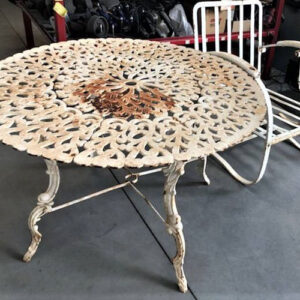 Before any powder touches your part, it has to be perfectly clean. We’re talking truly clean: free of rust, old paint, oil, mill scale, grease, and any other contaminants that could prevent the powder from bonding correctly.
We accomplish this using professional media blasting in our dedicated blasting room, a sealed 15′ x 10′ x 30′ space built specifically for this purpose. Our blasting equipment is manufactured by Clemco Industries Corporation, one of the top names in industrial blasting equipment, and it features a sweep-in recovery system that not only keeps our shop clean but helps us turn your parts around faster.
Media blasting works by propelling abrasive media (think of it like a very precise, powerful sandblasting) at high velocity against the metal surface. This strips away everything that isn’t metal and leaves behind a clean, slightly textured profile that the powder can grip onto. This step is the single most important factor in the longevity of the finished coat.
Step 2: Hand Sanding & Pre-Bake
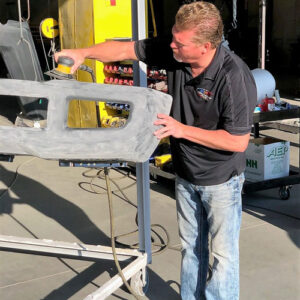 After blasting, our technicians hand-sand the surface to address any remaining rough spots or high points, and use high-pressure air nozzles to blow away all residual fine dust. We want the surface to be absolutely pristine before the powder goes on.
Then comes the pre-bake. We place your part in our Cardinal-certified curing oven and heat it to ensure the metal reaches an exact, consistent temperature before powder application. Why does this matter? Because metal expands when it heats up, and if you apply powder to a cold part and then heat it, you can end up with off-gassing from the metal that creates tiny bubbles or pinholes in the finished coat. The pre-bake drives out any moisture or trapped gases in the metal first, giving you a cleaner, stronger bond.
This step is often skipped by lower-quality shops. It’s one of the biggest differentiators in finish quality.
Step 3: Electrostatic Powder Application
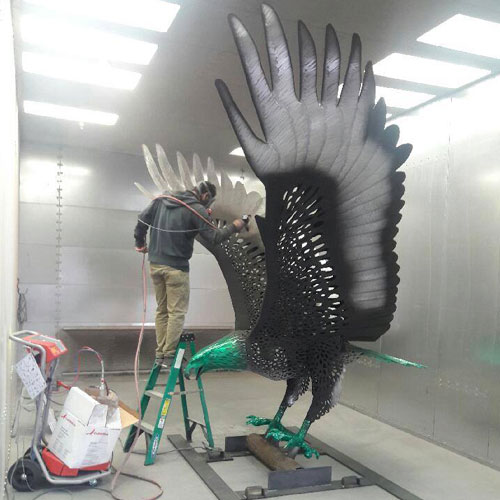
Here’s where it gets cool. Your part comes out of the pre-bake warm and ready. It goes into our spray booth, where it’s electrically grounded (connected to the earth electrically). Our technician then uses a specialized spray gun that imparts an electrostatic charge to the dry powder particles as they leave the nozzle.
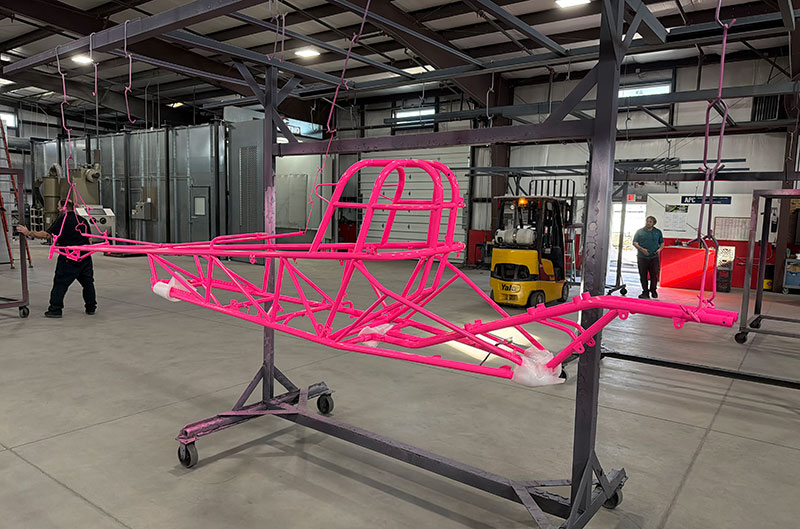
Those positively charged powder particles are irresistibly attracted to the grounded metal part. They wrap around edges, get into recessed areas, and cover the surface evenly, almost like the part is pulling the powder to it. The powder sticks securely before the part ever goes back in the oven, which means there are zero runs, drips, or sags — something liquid paint simply can’t guarantee.
The result is a remarkably even, consistent application across the entire part, including complex shapes, tubes, and corners that would be difficult to coat evenly with a brush or spray paint.
Step 5: Cooling & Visual Inspection
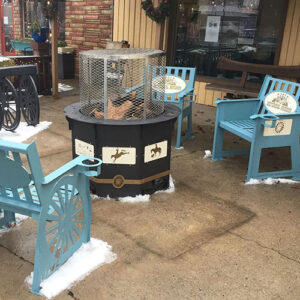 Once the cure cycle is complete, your part moves from the oven to our staging area to cool down gradually. While it cools, our team conducts a thorough visual inspection of the entire finished surface, checking for any imperfections in coverage, adhesion, or finish quality.
We are proud of our work, and we won’t release a part that doesn’t meet our standards. Only once we’re satisfied with what we see does your project get cleared for pickup or shipping.
Step 4: Curing
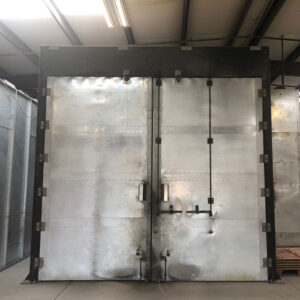 With the powder applied, your part heads into the curing oven at approximately 400°F. This is where the magic really happens: the dry powder particles melt, flow together, and chemically cross-link into a single, continuous polymer film that’s bonded to the metal surface at a molecular level.
This is fundamentally different from paint. Paint forms a film on top of the surface that can eventually peel away. Powder coating becomes part of the surface. The cross-linked polymer structure is what gives powder coating its extraordinary hardness, flexibility, and chemical resistance. The cure time and temperature vary based on the part’s size, mass, and any specialty textures or additives included in the powder formula.
Why Process Quality Matters
Here’s something the industry doesn’t always talk about: the quality of a powder coat finish depends almost entirely on the preparation work done before the powder is ever applied. Cut corners on cleaning, skip the pre-bake, or use subpar equipment, and even the best powder in the world will flake, bubble, or peel within months.
At Allegiant, we don’t cut corners. Our 5-step process has been validated by Cardinal, our primary powder supplier, who conducted a full diagnostics test on our 12′ x 12′ x 30′ natural gas oven. That means you’re not just getting our word that our process works. You’re getting Cardinal’s stamp of approval.
Our Equipment: Built for Quality
Cardinal-Certified Curing Oven
Our 12′ x 12′ x 30′ natural gas oven has been tested and certified by Cardinal, our primary powder coating supplier, to ensure precise, consistent temperature control throughout the cure cycle. Certification matters because uneven heat can produce uneven finishes. You’re getting a process that’s been independently validated.
Clemco Media Blasting Room
Our 15′ x 10′ x 30′ blasting room is equipped with Clemco Industries equipment, including a sweep-in recovery system that keeps our operation efficient and our turnaround times competitive. Clemco is the gold standard in industrial blasting equipment.
On-Site Forklift
We have a forklift on-site to unload freight from trucks and move heavy assemblies throughout our facility. This means enterprise customers and fabrication shops can deliver large, heavy items directly to our shop without worrying about logistics.